
How to Qualify for Federal Security Clearance Jobs?

Michael had five years of cybersecurity experience. Strong resume. Solid certifications. Yet every time he applied for defense contractor roles, the response was the same: Active clearance required.
He was not underqualified. He was simply un-cleared.
Six months later, Michael changed his approach. Instead of applying broadly, he targeted clearance-sponsoring contractor roles, aligned his resume to federal hiring standards, and prepared for the background investigation process.
Soon after, a contractor sponsored his Secret clearance. Within a year, his compensation increased by 32 percent.
Michael’s story is not unusual. Many qualified professionals struggle to enter the federal hiring ecosystem because they misunderstand how security clearance actually works. Security clearance is more than a credential. It is access. And in federal hiring, access changes everything.
The Federal Cleared Hiring Market in 2026
The national security workforce remains under pressure.
According to the Defense Counterintelligence and Security Agency (DCSA), millions of Americans hold active security clearances, yet agencies continue to face shortages in cybersecurity, engineering, intelligence, and cleared IT roles.
Recent industry compensation data shows:
- Average total compensation for cleared professionals reached approximately $119,000+ in 2025.
- Nearly half of cleared professionals earn six figures.
- Over two-thirds reported salary increases year over year.
Federal contractors, defense agencies, and intelligence community employers consistently report difficulty finding qualified cleared candidates.
That demand creates opportunity. But qualification requires strategy.
What a Security Clearance Really Means?
A security clearance is a formal determination that you are trustworthy to access classified national security information.
Clearance levels include:
- Confidential
- Secret
- Top Secret
- Top Secret / SCI
- Special Access Program (SAP)
Each level reflects the potential damage to national security if information were disclosed.
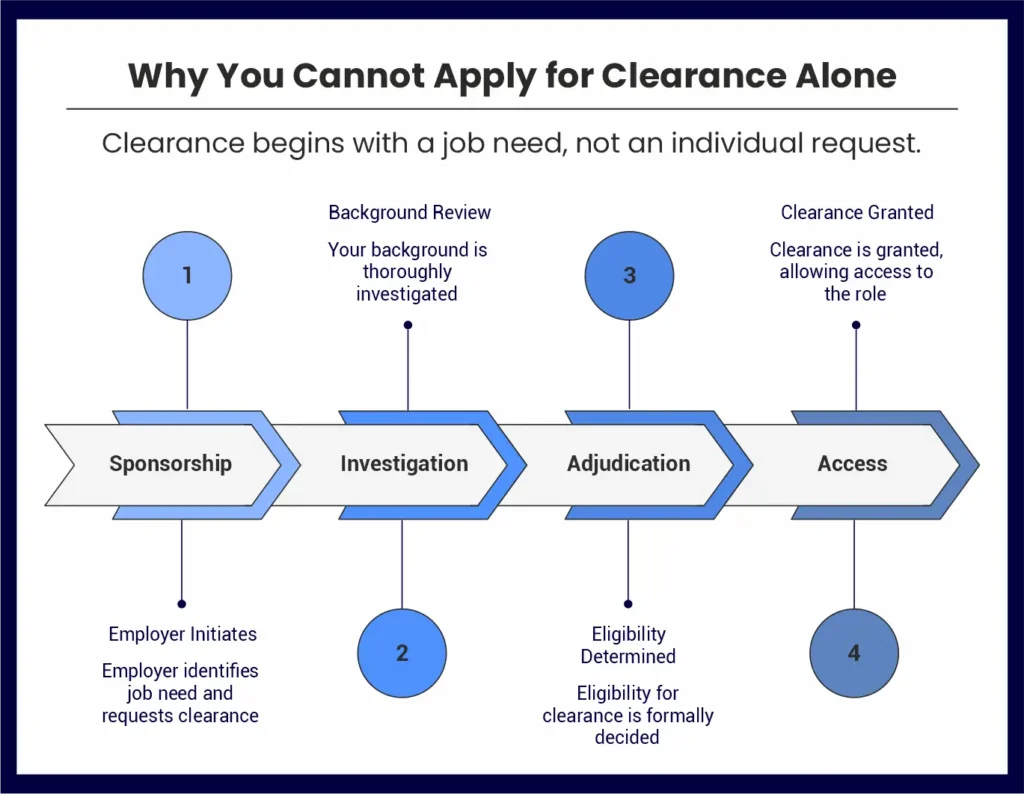
Clearances are not issued automatically. They require sponsorship by a government agency or cleared contractor. You cannot apply for one independently.
Steps to Qualify for Federal Security Clearance Jobs
Step 1: Meet the Core Eligibility Requirements
To qualify, you must:
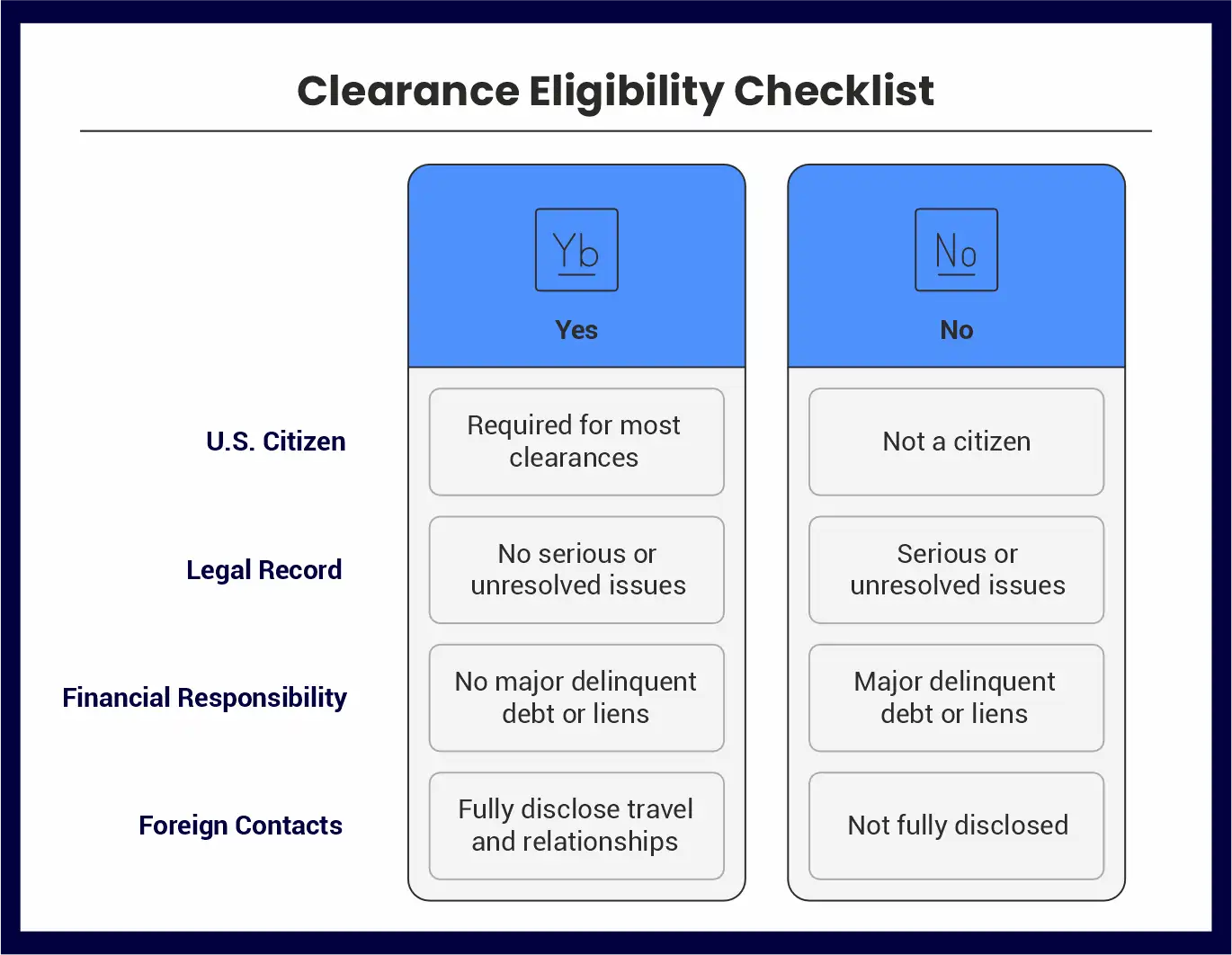
- Be a U.S. citizen
- Receive sponsorship from a cleared employer
- Successfully complete a background investigation
- Pass adjudication review
Eligibility factors include:
- Criminal history
- Financial responsibility
- Foreign contacts and influence
- Substance use history
- Personal conduct
- Mental health considerations
- Allegiance to the United States
The government evaluates the “whole person” concept. One isolated issue does not automatically disqualify you. Patterns and integrity matter more.
Step 2: Understand the Clearance Investigation Process
Once sponsored, you complete Standard Form 86 (SF-86). This form requires detailed disclosure of:
- 10 years of residential history
- 10 years of employment history
- Foreign travel
- Financial records
- Personal references
Investigators verify information through record checks and interviews.
Processing timelines vary by clearance level. Secret clearances may process faster than Top Secret or SCI investigations. The government has reduced backlog times significantly compared to prior years, but investigations still require patience and accuracy.
Transparency is critical. Omissions often cause more issues than past mistakes.
Step 3: Align Your Skills With Clearance-Sponsoring Roles
Clearance alone does not secure employment. You must combine eligibility with high-demand skills.
In 2026, the most in-demand cleared roles include:
- Cybersecurity Analysts
- Cloud Security Engineers
- Systems Administrators
- Intelligence Analysts
- DevSecOps Engineers
- Information Assurance Specialists
Federal cybersecurity hiring remains strong. The Bureau of Labor Statistics projects 29 percent job growth for information security analysts through 2032, significantly faster than average.
Many DoD contractor roles require baseline certifications such as CompTIA Security+ to meet DoD 8140 requirements. Certifications do not replace clearance. They strengthen your candidacy for sponsorship.
Real-World Example: From Civilian IT to Cleared Contractor
A Help Desk professional with five years of private-sector experience targeted defense contractor postings labeled “Secret clearance eligible.”
He completed Security+ to meet DoD baseline requirements. Within three months, he secured a role contingent upon investigation approval. His employer initiated clearance processing.
By the time adjudication finalized, he had already transitioned into a federal program environment.
Compensation increased by 25 percent. The key was targeting sponsorship, not waiting for an active clearance.
Read more- Cleared Talent Recruitment: Key Trends Federal Contractors Need to Know in 2026
Step 4: Improve Clearance Approval Odds
While no one can guarantee clearance approval, you can reduce risk by:
- Paying down delinquent debt.
- Resolving outstanding legal matters.
- Documenting foreign contacts accurately.
- Maintaining consistent employment history.
- Preparing references in advance.
Financial issues remain one of the most common adjudication concerns. Responsible debt management strengthens your profile.
Step 5: Leverage Veteran or Federal Experience
Veterans often hold prior clearance eligibility. Even if inactive, previous clearance history improves sponsorship prospects.
Transitioning service members should:
- Request clearance verification documentation.
- Align resumes to civilian federal language.
- Pursue certifications relevant to target roles.
Clearance plus military discipline plus technical certification creates strong positioning.
Step 6: Use a Cleared-Focused Hiring Marketplace
Many qualified professionals waste time on general job boards. Cleared hiring operates differently.
Employers often require:
- Clearance status verification.
- Clearance level disclosure.
- Federal contract alignment.
- Program-specific experience.
A specialized platform like HireClearedTalent connects:
- Cleared professionals
- Clearance-eligible candidates
- Verified federal contractors
This focused visibility accelerates recruiter outreach and reduces irrelevant applications.
Read more: Your Roadmap to a Cleared Career: How to Land & Grow in Security Clearance Jobs
The Long-Term Advantage of Clearance
Security clearance creates career insulation. During economic downturns, national security hiring often remains stable.
Cleared professionals benefit from:
- Higher compensation
- Stronger job mobility
- Access to mission-critical programs
- Reduced applicant competition
Many cleared professionals move into leadership, program management, or specialized intelligence roles within five to seven years.
Final Takeaway
Michael’s story is not unusual. The federal hiring system rewards preparation, sponsorship strategy, and visibility within the cleared ecosystem. Security clearance is not something you wait for. It is something you position yourself to earn.
In 2026, demand for cleared cybersecurity, engineering, and intelligence talent continues to outpace supply. Compensation remains strong. Career mobility is real. But access belongs to professionals who understand how the system works and act accordingly.
That means aligning your skills with clearance-sponsored roles. It means preparing for the background investigation process. And it means placing yourself where cleared employers are actively searching.
HireClearedTalent was built specifically for this purpose. Our marketplace connects clearance-ready and actively cleared professionals with verified federal contractors and government hiring partners. No general job board noise. No unrelated roles. Just focused federal opportunity.
If you are serious about entering or advancing within the cleared workforce, take the next step. Create your profile on HireClearedTalent and position yourself where cleared hiring happens. Ready to discuss your clearance strategy or career path?
FAQ –
Q1: Can I apply for a security clearance on my own?
A: No. You cannot apply for a security clearance independently. You must receive sponsorship from a federal agency or cleared government contractor for a role that requires access to classified information.
Q2: How do I get a company to sponsor my security clearance?
A: Target job postings labeled “clearance eligible” or “clearance sponsorship available.” Align your resume to federal requirements and ensure you meet eligibility criteria before applying.
Q3: What disqualifies you from getting a security clearance?
A: Common risk factors include serious criminal activity, significant unpaid debt, falsification of information, or strong foreign influence concerns. The government evaluates the whole person, not isolated incidents.
Q4: Does bad credit automatically disqualify me from a clearance?
A: No. Financial issues do not automatically disqualify candidates. However, unresolved delinquent debt or patterns of financial irresponsibility can raise concerns during adjudication.
Q5: How long does the security clearance process take in 2026?
A: Processing times vary by clearance level. Secret investigations generally move faster than Top Secret or SCI. Timelines depend on investigation scope and case complexity.
Q6: What is reviewed in the SF-86 background investigation form?
A: The SF-86 covers 10 years of residential and employment history, foreign travel, financial records, personal references, and legal disclosures.
Q7: Can I get a federal job without an active clearance?
A: Yes. Many contractors hire candidates who are clearance eligible and initiate sponsorship after a conditional offer.
Q8: Do certifications help me qualify for clearance jobs?
A: Certifications do not grant clearance, but they strengthen your candidacy for sponsorship. Many DoD contractor roles require baseline certifications such as Security+ for compliance.
Q9: What is the difference between Secret and Top Secret clearance?
A: The difference relates to the sensitivity of information accessed. Top Secret clearance involves more extensive investigation and access to highly sensitive national security data.
Q10: How can veterans leverage prior clearance eligibility?
A: Veterans should verify their prior clearance status, update resumes with federal language, and pursue certifications aligned with current contractor requirements.